
5 Reasons Why Hydrangeas Aren’t Flowering
Written by Daniel Woodley. Reviewed by horticulturist Elizabeth Smith. Published to Hydrangeas on the 11th August 2021. Updated 1st March 2023.
We independently research, combine and grow plants in our gardens. If you buy something via links, we may earn a commission. Explore our editorial process.
Hydrangeas are one of the most popular plants in the UK and are usually chosen for one reason; their huge blooms.
A healthy hydrangea will produce an abundance of blooms and thick, deep green foliage each and every year, often well into autumn.
I’ve never found hydrangeas difficult to grow and rarely have I encountered issues but I have met and helped others who have struggled to get their hydrangeas to perform.
If that’s you, I’m sure you’ll find my guide helpful:
1) Pruning
From speaking to other gardeners face-to-face and chatting online, I believe that this is the most common reason why some hydrangeas don’t flower or only produce very small or weak flowers; incorrect pruning.
Different hydrangeas will have different pruning requirements, and some of these plants only flower on old wood, meaning if you prune off these old stems below a certain point, the plant won’t produce any flowers that year.
To confuse matters, some hydrangeas perform better after being pruned back to a framework of thicker stems or even close to ground level.
Below is my quick guide to pruning hydrangeas, so they flower each year, but if you’re in doubt or struggling to identify your hydrangea, leave it be and don’t prune it all. You can always leave a hydrangea unpruned and observe how it performs in the summer.
Once you’ve identified which hydrangea you have (watch this video for help), use this cheat sheet:
Photos Showing Hydrangea Flowers on Old Wood
Having worked with gardeners for many years, I’ve noticed that hydrangea macrophylla is the plant with which they have the most problems, as this variety is less likely to bloom if pruned too hard.
The photos below show blooms appearing on old wood that grew last year.
New growth can also be seen in the photo, but this won’t produce flowers this year.
Note that macrophylla sets buds in autumn, and if you prune these off in the spring, it won’t flower that year.

Photo showing hydrangea macrophylla flowers growing from old wood near the tip of the old stem.
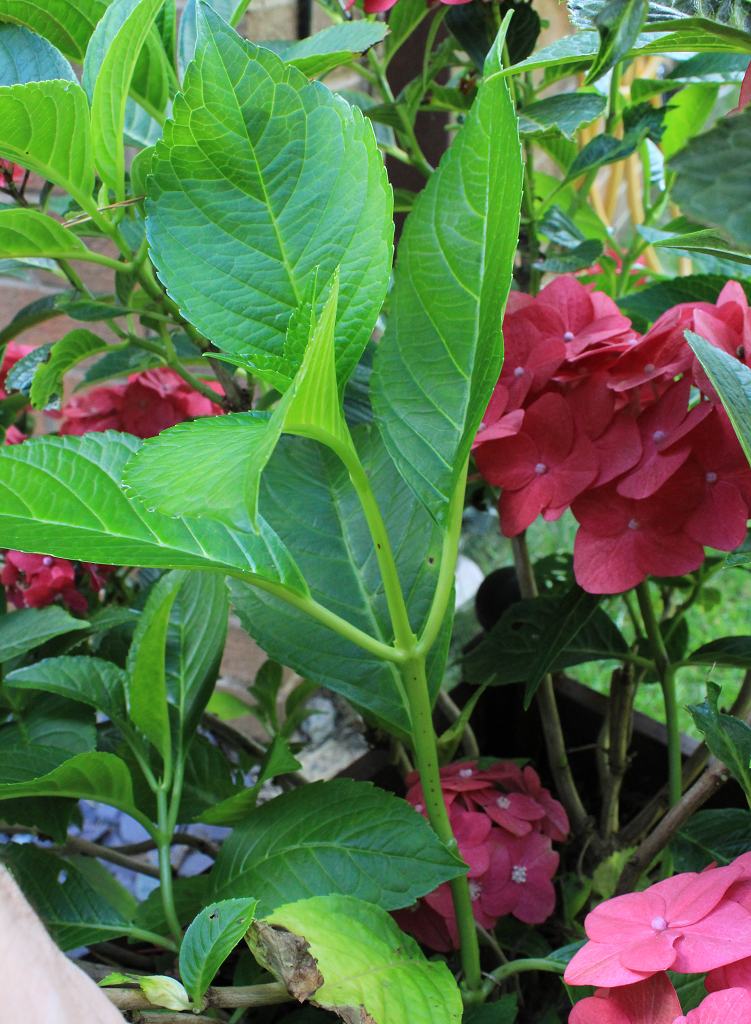
New growth from a stem that was pruned close to the ground in the spring. Note the lack of blooms.
2) Frost Damage
Frost can affect any hydrangea plant, but those that flower on new wood are less susceptible as any frost-damaged stems can be pruned off, and the hydrangea will still flower on new growth.
I know from experience that hydrangeas that flower on old growth are a different matter. If the frost is severe and the buds are killed off, the plant won’t flower at all or may produce fewer flowers. I experienced this in 2019 when a hard frost blackened most of the stems on my potted hydrangeas, they recovered but flowered very poorly that year.
I’ve found that frosts which occur in late spring are the most damaging as the buds will be growing and fleshy. If you experience a mild winter followed by severe spring frosts, there’s a good chance your hydrangeas will experience some frost damage.
Here are my tips:
- Keep hydrangeas (esp those in pots) watered through the winter, they still need moisture, and a weak plant is less likely to recover well from frost damage.
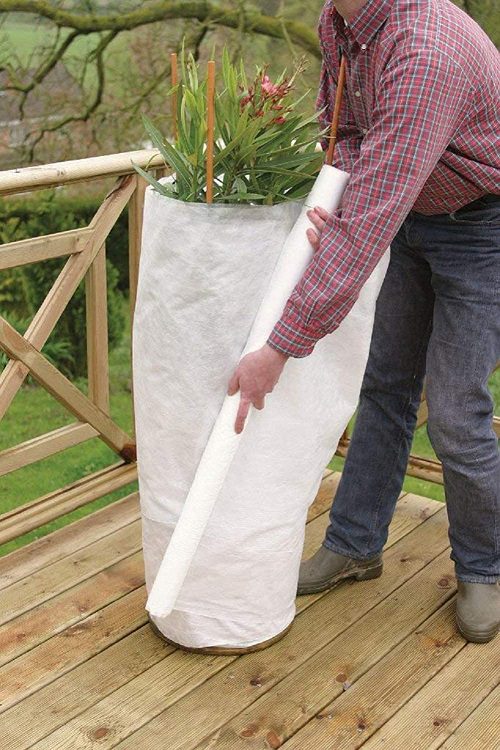
- Consider using frost fleeces or other types of protection.
- I have four potted hydrangea macrophyllas and during cold frosty spells, I relocate them to a sheltered spot.
- If you live in a frost-prone area, consider hydrangeas that bloom on new wood, as they’re less likely to suffer frost-related problems with flowering.
Update 2022: Hannah published a guide to why hydrangea leaves sometimes curl and wilt.

(Above photo) A late frost in mid-April damaged this stem which turned black and fell off.

(Above photo) Frost damage to a hydrangea leaf in spring
Frost Fleeces and Protection Jackets
There are dozens of frost protection products on the market, with fleeces and jackets being the most popular.
Jackets are great for plants that don’t grow much, while fleece wraps are better for larger plants.
Depending on where you live, you may not need to use these products all winter, only when frost is imminent.
I don’t use fleece as my hydrangeas are in pots, I just relocate the pots but if I couldn’t, I would consider a fleece.

3) Too Much Nitrogen
Some popular fertiliser products (such as Miricle Gro All Purpose) contain high doses of nitrogen, which promotes leaf and stem growth but often at the expense of flowers.
The Garden Myths website sums up these products perfectly:
“Too much fertilizer, particularly high nitrogen fertilizer, can result in beautiful leaves but few, if any, flowers.”
Based on my many years of growing hydrangeas and testing different feeds, I feel that the best fertiliser for hydrangeas is one that’s balanced or has higher potassium.
Here are the ratios for two of the most popular hydrangea fertiliser products:
Westland Hydrangea Liquid Feed: 4-2-7 NPK.
Vitax Hydrangea Feed: 8-4-12 NPK.
(NPK means Nitrogen, Phosphorus, potassium, in that order)
Compare these ratios to the Miricle Gro All Purpose: 24-8-16 NPK.
In a nutshell: I think you should avoid fertilisers with high concentrations of nitrogen. Instead, I use a balanced feed or a dedicated product with a slightly higher potassium level.
Recommended Hydrangea Feed
I used this product on my potted hydrangeas for an entire year and I believe it has the best ratio of nitrogen, phosphorous and potassium. I was pleased with the results, and as a bonus, it’s slow-release, so I just sprinkled it onto the soil and then left it.

4) Too Much Sun/Shade
Go to any blog post or webpage about hydrangeas, and you’ll likely see a warning about sunlight.
I’ve even seen some claim hydrangeas should never be placed in direct sunlight!
The truth is that hydrangeas can cope with plenty of direct, midday sunlight, provided the soil isn’t allowed to dry out fully. I know because I’ve grown them in full sun before, and they thrived.
Hydrangeas love moist soil and can struggle if grown in bone-dry ground conditions, and this is the issue rather than the amount of sunlight.
I’ve seen hydrangea macrophyllas grown in heavy shade before and they produced very small and weak flowers on leggy stems, they didn’t look appealing at all.
Based on my ten years of growing hydrangea macrophyllas, I feel that the ideal spot for any hydrangea is:
- A spot with plenty of morning sun.
- An area with protection from searing midday sun if you cannot water the plant frequently.
- Somewhere that provides dappled sunlight.
- A pot that is large enough so the soil doesn’t dry out every day.
If your hydrangea isn’t producing many blooms and isn’t in an ideal location, consider moving it.
5) Young and Recently Relocated Plants
Recently purchased hydrangeas may take a year or two to get going, so when looking around the local garden centre, try to find one that already has at least one flower.
I’ve grown plenty of hydrangeas from cuttings, and they usually won’t flower in the first year but typically do in the second year.
I’ve also seen plants, including hydrangeas, suffer from transplant shock, so don’t be surprised if your plant doesn’t flower for a year after being relocated. The hydrangea is spending energy on root development and top growth at the expense of flowers and will likely recover the following year.
Other Reasons Hydrangeas Don’t Flower
Other reasons hydrangeas don’t flower:
Deers eating the buds – more common in the United States than in the UK, but deers can eat the young buds. This damage is exactly the same as improper pruning – the buds are destroyed before they have a chance to bloom.
Beetles can eat the young flowers and buds, but from what I know, the beetle numbers would have to be high to affect an entire hydrangea plant.
Lack of water – as their name suggests, hydrangeas require more moisture than most shrubs, and I know from my testing that a consistently underwatered hydrangea won’t bloom or will produce small, sickly flowers.
The Most Reliable Flowering Hydrangea
I’ve always found hydrangeas fairly easy shrubs to grow, but frost damage can be a persistent problem in some areas.
The hardiest hydrangea I’ve ever grown is the paniculata, and I recommend this to anyone who has consistently struggled to get other hydrangeas to bloom.
The paniculata is known as a reliable bloomer as it tolerates extremes much better than any other hydrangea:
- Flowers on new growth, so is less susceptible to frost damage.
- Winter hardy to US zone 3.
- It’s very forgiving of pruning mishaps and prefers hard pruning.
- I’ve seen it perform well in very shaded areas that many other hydrangeas struggle in.
Savvy Gardening has more information about the ever-reliable hydrangea paniculata.

Recap
The most common reason for hydrangeas to stop flowering is incorrect pruning. This primarily affects macrophylla as other hydrangeas are more forgiving – if in doubt, don’t prune at all for a year to see what happens.
Frost damage can affect all hydrangeas and I’ve experienced this myself on my potted macrophyllas, but it affects those that flower on old wood more. Late spring frosts are the most damaging as new buds grow fleshy and are more susceptible to cold weather at this time of year.
Too much nitrogen, too little water and sunlight issues also prevent hydrangeas from flowering at their full potential.
Hydrangeas are beautiful plants and a mainstay of my garden, and I hope you found this guide to hydrangea flowering issues insightful.
Related Content
Discover more from DIY Gardening:




Author: Daniel Woodley
Daniel has over 18 years of experience in the construction, home improvement, and landscape garden industries.
He previously worked as a project manager and has experience in managing teams of tradespeople and landscape gardeners on both small and medium sized projects.
Daniel is also a keen gardener and enjoys growing unusual plants and tending to his lawn.

Why Trust Us? Our Experience
At DIY Gardening, we follow a detailed, rigorous process to create content that is helpful, factually correct and meets the highest standard of integrity.
Our 5-step process is:
1) We select a topic that we feel will help our readers.
2) The author creates the content based on their knowledge and experience of the subject.
3) We ask an expert with qualifications in the relevant area to fact-check and review the content, which we update accordingly, if applicable.
4) The content is checked by the site owners and published.
5) We review the content yearly to ensure it’s still correct and relevant.
Daniel has been growing hydrangeas for over 10 years and wrote this guide based on his experiences.
We also asked horticulturist Elizabeth Smith to review and fact-check this guide before publication.
Explore Even More of Our Content Below:
The Best Plants for a Low Maintenance Garden
We think these are the best plants for a low-maintenance garden but of course, no plant is 100% maintenance-free. Explore our list today. Start HereYellow Hydrangea Leaves
Find out what causes hydrangea leaves to turn yellow and discover how to solve this problem permanently. Start here

