
How to Grow Candytuft: The Complete Guide
Written by Hannah Miller. Reviewed and Fact Checked by Elizabeth Smith. Published to Spring Plants. Updated: 19th February 2023.
Our editors publish helpful guides and insights learnt from years of experience and recent research. They also test, review and suggest plants and products. If you buy something via links, we may earn a commission, but we have a strict editorial process.
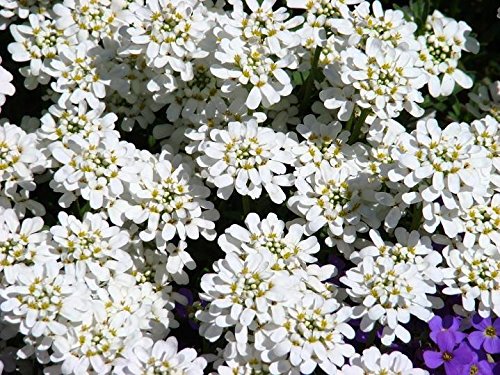
Candytuft is an underrated matt-forming perennial that produces a carpet of 4cm blooms from late spring into summer.
Perfect for growing in garden areas with sharp drainage, such as gravel, rockeries and edges, I have found that candytuft compliments other plants that prefer poor soil, such as aubrieta and sedum.
Key plant details:
- I’ve grown it successfully in chalky, sandy or poor soil in full sun.
- Ground covering, ideally suited to the edges of paths and patios.
- I’ve seen it perform well in rockeries.
- Perennial and easy to care for, I’ve seen it become invasive, but it’s slow-growing and easy to control.
- Low maintenance, and I’ve never seen it suffer from few pests and diseases.

Size
Height: Up to 40cm (16″)
Spread: Up to 50cm (20″)

Type
Perennial evergreen, sometimes grown as an annual

Growth
Slow growing: up to 5 years to full size

Difficulty
Easy to grow, even for beginners

Native
Native to the Mediterranean

Location
Walls, rockeries, paths, around boulders, gravel gardens, coastal

Sunlight
Prefers full sun in all but the hottest parts of the UK and US

Hardiness
US zone 4-9 and hardy in all parts of the UK

Water & Feed
Drought tolerant once established. Candytuft prefers poor soil and there’s no need to fertilise or apply excess water

Companions
Can be grown close to other plants that prefer well-drained, poor soil such as sedum and aubrieta

Planting
Sow seeds in spring or autumn or plant plugs from spring

Flowering
Late April, May, June and July


The Best Candytuft Varieties
There are over fifty varieties of candytuft, but the only one I’ve grown is Iberis sempervirens.
These include:
Iberis “Pink Ice” – An early flowering variety that I’ve seen bloom as early as late March. Expect deep evergreen foliage and clusters of light pink flowers around a darkened centre.
Iberis “Snowflake” – This is the classic candytuft, an RHS award winner and my favourite. This variety produces off-white blooms around a compact centre with shades of yellow.
How to Grow Candytuft
How Does Candytuft Arrive?
Candytuft can be purchased as seeds for sowing in spring or autumn, but I’ve grown it from plugs purchased from garden centres and online retailers.
Where is the best spot for candytuft?
I’ve found through trial and error in my garden that candytuft prefers sharp drainage such as gravel, rockeries, on the sunny-side of walls, as edging along paths and in elevated positions.
Is candytuft full hardy? Will it survive the US/UK winters?
Candytuft is winter hardy in all parts of the UK and in US zones 4-9.
This plant is usually grown as a perennial and is evergreen so keeps its leaves throughout the winter.
Is candytuft invasive?
While technically an invasive species, it does indeed spread, especially if left unattended, but candytuft is slow-growing, and I found it easy to control in my garden. Its spreading nature was never an issue for me.
What soil conditions are best for candytuft?
Candytuft prefers poor soil that’s free-draining and from experience, I feel that grit, gravel and chalky soils are most suitable.
The soil shouldn’t be overly fertile or soggy; the sharper the drainage, the better.
When and how should candytuft be planted?
Candytuft seeds can be sowed in spring or autumn but when the soil is warmest.
Plugs are best planted in the spring.
Keep the soil moist but not soggy until the plant is established, then water with no more than one inch of water per week during the summer.
I spaced the plugs around 6″ apart and they grew just fine as groundcover.
Whether you grow seeds or plugs, add plenty of grit or other drainage material to the soil, especially if they’re grown in pots.
Is candytuft prone to pests and diseases?
In my garden, candytuft was largely disease-free and easy to grow.
I believe it can suffer from root rot due to overwatering or soggy ground conditions.
Leaf spot and leaf fungus are also possible, but from what I know, they generally only affect plants grown in unsuitable damp areas.
While mostly pest-free, candytuft is prone to slugs and snails, which were an issue for me. Such pests can be treated with commercially available products.
Aphids and spider mites may be attracted to your plant but were never an issue for me.
When does candytuft flower and how long for?
In my garden, I noticed that candytuft started flowering in April and often lasted well into summer.
How much water and fertiliser does candytuft require?
Candytuft requires no more than one inch of water per week during drought conditions and much less during normal weather as it’s drought tolerant once established.
I never used fertiliser but a yearly mulch appeared to help.
Is candytuft toxic or harmful to humans and pets?
Candytuft may cause very mild skin irritation and a rash when handled, although I never experienced this. Toxicity to animals and pets is not known.

How to Care For Candytuft After It’s Finished Flowering
I found candytuft an incredibly easy plant to grow, and it bridges the gap between spring and summer, but like most plants, it does require some attention to keep it at its best:
Candytuft Pruning
The candytuft in my garden are fairly self-regulating, but eventually, the stems will become leggy and bend downwards where they may self-propagate in the soil.
By pruning the plant after flowering, the gardener can keep the plant in check and help it maintain a compact, mounded shape.
Prune up to half of the plant but not into the woody stems.
If you want to grow trails over walls or pots, then keep any pruning to a minimum.
Disease Prevention
After flowering, remove any diseased leaves showing signs of illness, such as spots or fungus. Turn over the soil to improve drainage if required.
Propagation
There are three ways to propagate candytuft; by seed, cuttings or root division.
Seeds should be grown in warm soil, no less than 75 degrees.
Cuttings are slow to form roots, but the best stems are green, healthy ones.
Established plants can be divided at the roots in the autumn. Split the largest plants into two or three mid-size plants but don’t break into smaller plants.
The Best Companion Plants For Candytuft
I’ve grown candytuft successfully as groundcover below taller, single-stemmed spring plants such as late tulips and alliums but it can be combined with other low-growing plants that would be at home in a rockery such as lamb’s ear, sedum or phlox:


5 Pro Tips For Growing Candytuft
Here are five tips for anyone wishing to grow candytuft:
- While candytuft can survive in partial shade it won’t produce as many blooms and is more likely to weaken due to diseases found in damp soils. Pick a bright sunny spot for the best results.
- I’ve found that drainage is crucial and candytuft won’t survive in soggy soils.
- Prune with sharp secateurs, this helps to shape candytuft and should be completed after flowering, cut between one-third and half the plant. Don’t prune at all if you want this plant to trail down a wall or over the edges of pots.
- Only water when you need to as candytuft is drought tolerant once established.
- There is no need to apply fertiliser more than once per year.
Elizabeth Smith’s Take on Candytuft
Here is a quote from Elizabeth Smith, a qualified horticulturist:
Candytuft is an underrated and underused plant that’s easy to grow and maintain if located in a suitable spot. Choose from the classic white variety or go bold and make a statement with pinks and purples.
While usually grown for groundcover, why not try letting this delightful perennial cascade over the edge of pots or retaining walls?
More Photos


Discover More
Explore related content from us here at DIY Gardening:
Our Expertise: Backed by a Qualified Horticulturist
We follow a detailed, rigorous process to create content that is helpful, factually correct and meets the highest standard of integrity.
Our 5-step process is:
1) We select an author from our pre-approved list.
2) The author creates content based on their knowledge of the subject.
3) We ask a professional with qualifications and experience to fact-check and review the content which we update accordingly, if applicable.
4) The content is checked by the site owners and published.
5) We review the content yearly to ensure it's still correct and relevant.
This guide was reviewed and fact-checked by qualified horticulturist Elizabeth Smith.
Explore: Elizabeth's profile and qualifications.
Meet The Author: Hannah Miller
Hannah is a keen gardener who grows organic fruit and vegetables in her Surrey garden and is moving towards a more sustainable lifestyle.
She is also the proud grower of a dahlia and herb garden.
Hannah worked for the NHS for 12 years but also has a level 3 qualification in horticulture and is currently studying for her level 4.

Explore More of Our Content Below:
The Best Plants for a Low Maintenance Garden
We think these are the best plants for a low-maintenance garden but of course, no plant is 100% maintenance-free. Explore our list today. Start HereGarden Plants For North-Facing Gardens
A shaded north-facing garden doesn’t mean you have to miss out on beautiful plants, explore our guide to plants for shaded gardens. Start Here
Plants for Winter Colour
Say goodbye to dull, grey winters by choosing plants that produce colour all through the cold season. From annuals to perennials we’ve got plants you’ll love. Start Here.

